How Much Weight Can a Climbing Carabiner Hold
Understanding Carabiner Strength Ratings
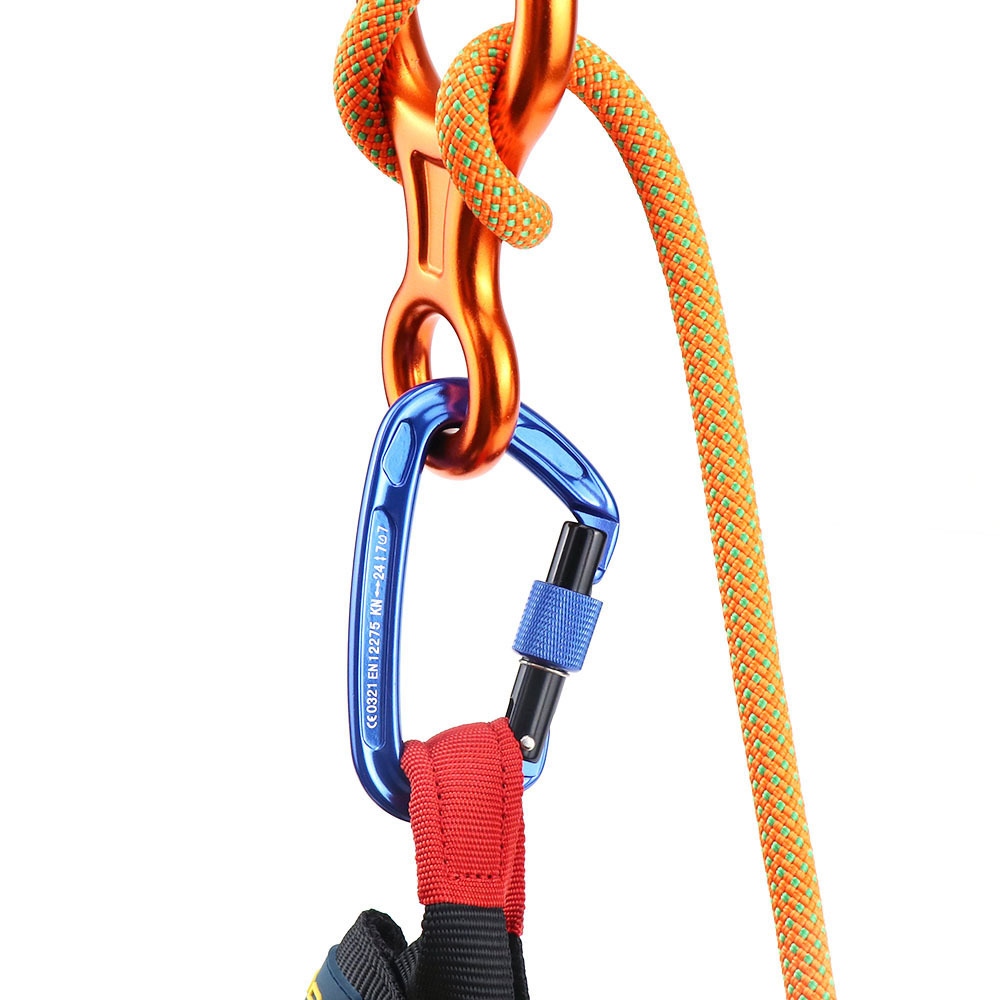
Carabiners are rated based on their ability to withstand force, typically measured in kilonewtons (kN). One kilonewton is equivalent to approximately 224.8 pounds of force. Most climbing carabiners are rated between 20-30 kN, which translates to 4,500 to 6,750 pounds of force. However, this rating applies to the carabiner when loaded along its major axis (the longer, stronger side).
Types of Carabiners and Their Weight Limits
-
D-Shape Carabiners
D-shaped carabiners, supplied by reputable d shape carabiner suppliers, are among the strongest types because the design directs most of the force to the spine, which is the carabiner’s strongest point. They are commonly used in lead climbing and heavy-duty applications.- Strength Rating: Usually around 24-30 kN on the major axis.
-
Oval Carabiners
Oval carabiners distribute force more evenly but are generally less strong than D-shaped ones. These are ideal for less intense climbing tasks like racking gear.- Strength Rating: Typically rated between 18-20 kN.
-
HMS (Pear-Shaped) Carabiners
These are versatile and often used for belaying or rappelling. While strong, they may not match the load capacity of D-shaped carabiners.- Strength Rating: Usually around 22-25 kN.
-
Lightweight Carabiners
Often used for alpine or sport climbing where reducing weight is critical. However, they might have a lower strength rating.- Strength Rating: Around 18-22 kN.
Why Understanding Weight Limits Matters
1. Safety During Climbing
Exceeding a carabiner’s weight capacity can lead to catastrophic failures. Climbers must consider not just their own weight but also the forces exerted during dynamic movements like falls, which can multiply the load on the gear.
2. Application-Specific Requirements
Different climbing activities, such as trad climbing, sport climbing, or big wall climbing, demand carabiners with specific weight capacities. For example, a carabiner for anchoring gear may need to handle higher forces compared to one used for quickdraws.
3. Quality Assurance
Buying from trusted sources like a climbing carabiner factory, carabiner distributor, or carabiner manufacturer ensures you’re getting gear that meets industry standards for safety and strength
Additional Factors to Consider
-
Material
Most climbing carabiners are made of aluminum or steel. Steel carabiners, often found in industrial or rescue applications, can hold significantly more weight than aluminum carabiners, making them a preferred choice in high-load scenarios. -
Gate Type
Carabiners with locking gates provide extra security and are recommended for critical connections. Non-locking gates, while lighter, are better suited for secondary uses like holding gear. -
Certifications
Always ensure your carabiner meets certification standards such as CE or UIAA. These certifications confirm the carabiner has undergone rigorous testing.
Wholesale Carabiner Options for Businesses
If you’re a business buyer, working with a reliable carabiner wholesale supplier is essential. Manufacturers offer tailored solutions, including customized designs, bulk pricing, and branding options. Partnering with an experienced d shape carabiner supplier ensures access to premium-quality products that cater to various climbing needs.
The weight a climbing carabiner can hold depends on its type, material, and design. Choosing the right carabiner is critical for ensuring safety and performance during climbs. Always buy from trusted climbing carabiner factories or carabiner distributors to guarantee quality. Whether you’re scaling cliffs, navigating alpine routes, or securing gear, understanding your equipment’s strength and specifications is non-negotiable. For businesses, collaborating with wholesale suppliers allows you to provide top-tier climbing gear to your customers while maintaining safety and reliability.